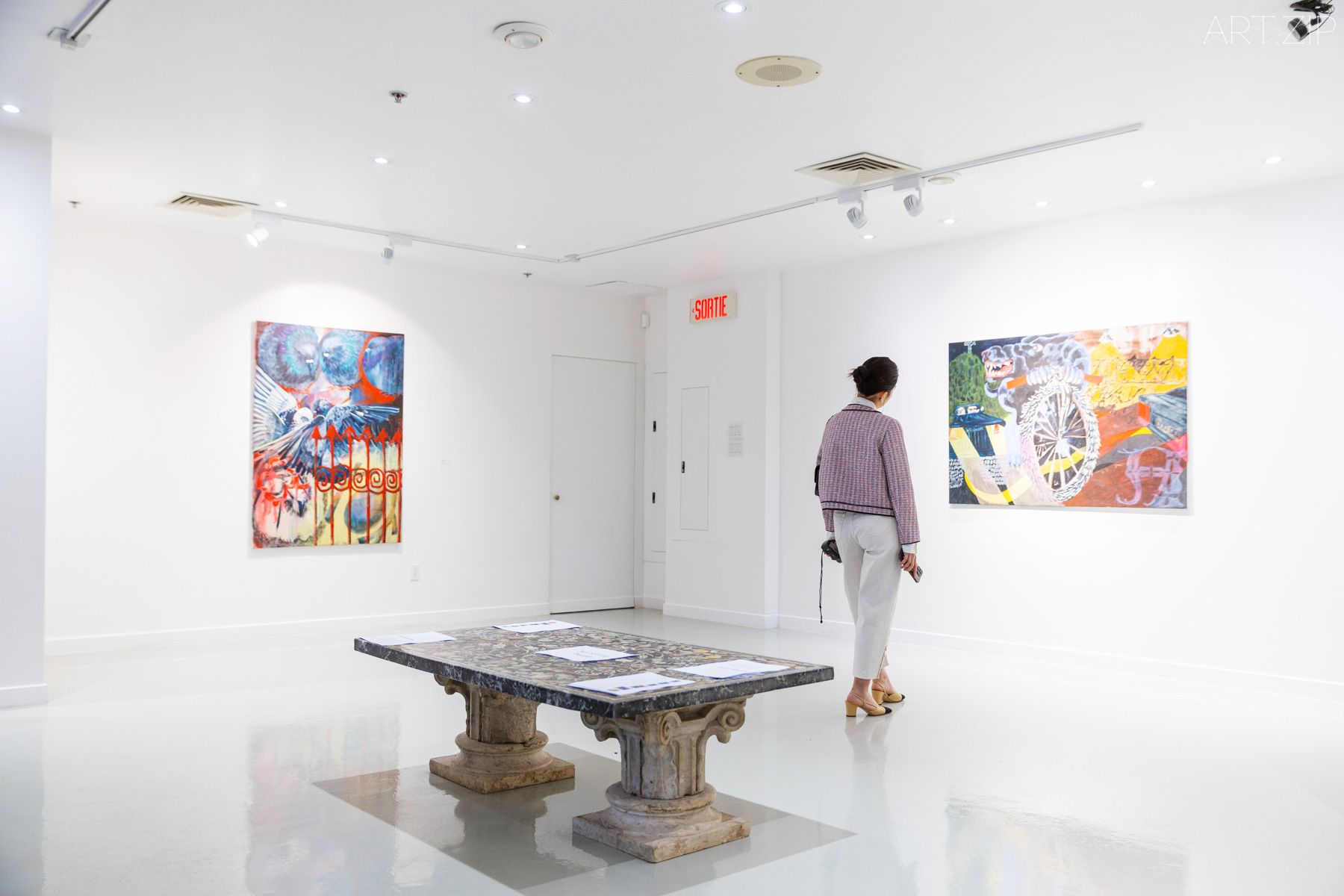
The First Demo Exhibition
Curator: Katie Hill
Artist: Xiao Lu, Sheng Qi, Mad For Real
Drawing on multiple strands of the notion of heritage in the long and short-term, this exhibition shows the work of four seminal artists whose work has shaped global contemporary art discourse over a period of over thirty years. As the first exhibition of XVX, the show responds to the 18th century heritage building in Clerkenwell as a new gathering place for artists.
Xiao Lu, the grand dame of the Chinese avant-garde is a hugely important figure in the history of contemporary Chinese art. Her 1989 work Dialogue (Tate Modern collection) was the most infamous work of the time marking a dramatic endpoint to the prolific cultural decade of the 1980s in China. Taking a pistol into the National Gallery of Art, Beijing, she fired two shots into her installation ‘Dialogue’ propelling an immediate closure of the large-scale exhibition, causing shockwaves across the art community. The work gave rise to many years of conflicting narratives about what happened, increasing its legendary status, with Xiao Lu left dumb at the mercy of male gatekeepers in China’s art scene. Here, she shows a new work responding to the heritage building for the inaugural show at XVX.
Sheng Qi is best known for his Hand photographic series depicting his own hand of four fingers on which is placed a tiny black and white portrait from the past. This powerful image holds complex layers of personal history set against a symbolic ‘red China’ as site of pain and memory. His numerous performances dating from the late 1980s into the 1990s were raw expressions of suppressed humanity. Critically interrogating a totalising politics in the hands of an all- powerful communist state and its physical and psychological effect on the individual. The earlier works range from collective joyful and intense movements and happenings such as the Great Wall (title) to singular, shocking iterations of the traumatised body.
Mad For Real (JJ Xi and Cai Yuan) became known for their satirical interventions in the public space, and a series of performances in the late nineties into the noughties, (naughties!) placing their bodies directly onto the British cultural and political environment (Tate Britain, Downing Street, Buckingham Palace). Two Artists Jump on Tracey Emin’s Bed (Turner Prize Tate Britain) became an overnight press sensation in 1999, an event that was widely misrepresented in British news, revealing a heady mix of hilarity, exoticism, excitement and racism. The British public ‘got it’ on the level of entertainment value, but the layers of snobbery in the contemporary art establishment pitched at Emin as a radical female artist and MFR as clear ‘foreigners’ bore traces of the continued legacy of sexism, colonialism and strategies of exclusion, actively denying artistic value due to their percieved marginal status.
The idea of heritage brings together threads of connection in the exhibition to the legacy of early contemporary art practice from China and to the experience of becoming woven into the heritage of contemporary art in Britain and ‘global’ art histories. It plays on the perceived heaviness of history and suggests that heritage is dynamic and ever-evolving rather than single or contained.
Xiao Lu, Sheng Qi and JJ Xi were active participants in the China avant-garde. Sheng and Xi held their performance-event collective 21st Century (3×7=21) on Beijing University campus in 1987 along with a series of events preempting the vital role of performance to characterise the 1990s in the globalised context.
The curator’s long-term collaboration with the artists Mad For Real is a further strand in the project. In a sustained collaboration over more than twenty-five years, Hill wrote the texts for Jump and subsequent performances. The project extends the discursive space for artistic migration across China, Britain and Australia within the framing of English Lounge, a project produced in Beijing in 2009 about travel, and the in-between space of the airport lounge. 17 years later, the project returns in XVX as a new home or ‘lounge’ for artists from the Chinese diaspora, whose presence is a vital thread in histories of migration. It aims to create a space to hang out and carry on the conversation in the house…
Artists