ABOUT THE BUILDING
72 Compton Street, a Grade II listed building, forms part of a modest late Georgian and early Victorian terraced house that characterises much of Clerkenwell’s historic urban fabric. The building has recently opened as a contemporary art space.
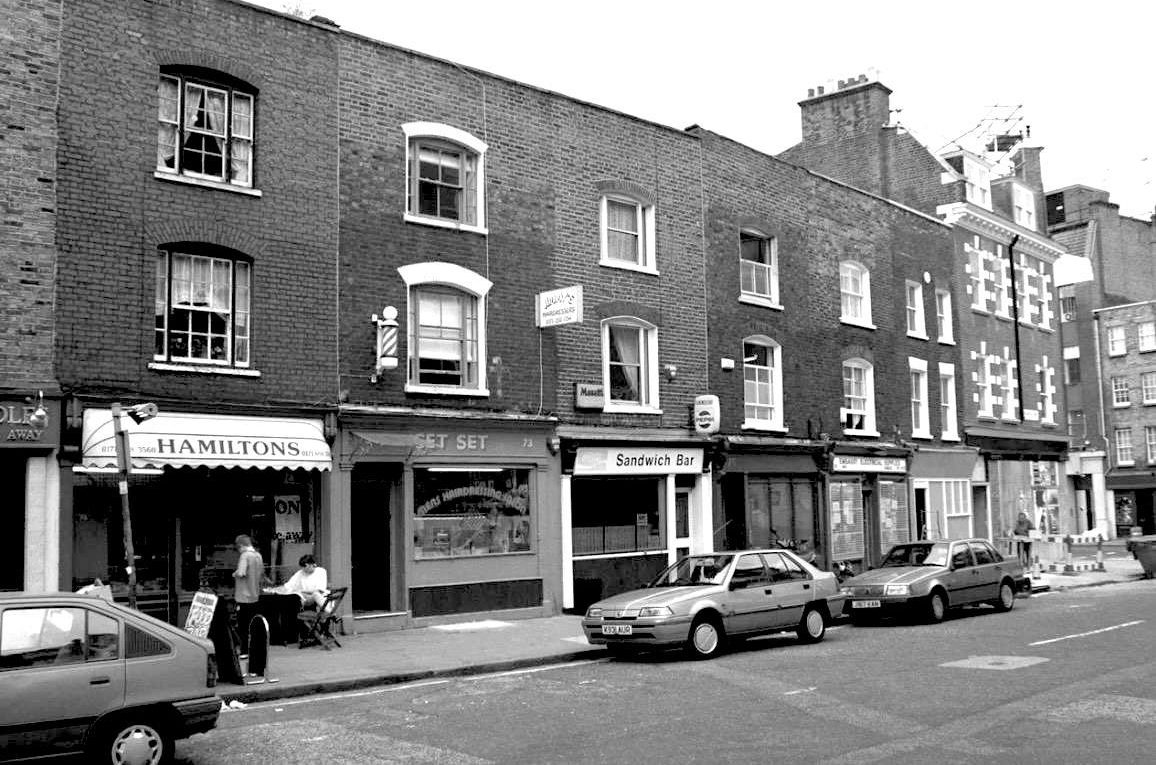
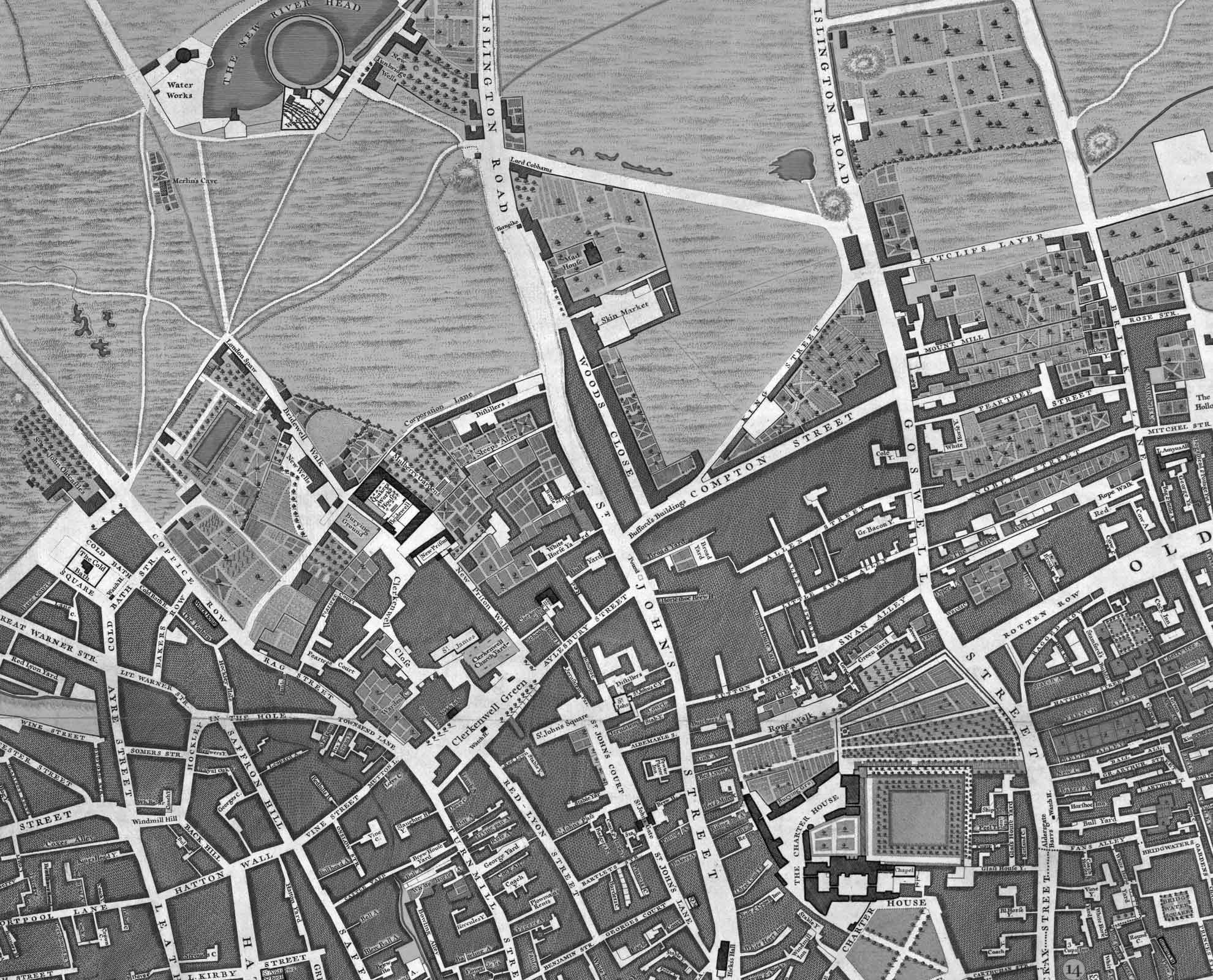
Timeline of Compton Street
Roman Period (after AD 43)
Early routes developed to the north of the Roman city of London, including roads that later formed part of the droving routes leading towards Smithfield.
Medieval Period
Land to the north of the City remained largely agricultural. The Bunhill area became associated with burial grounds located outside the city walls.
16th Century
The area became known as Woods Close and formed part of the Northampton Estate.
1686
A lease of Woods Close was granted to William Pym for a period of 62 years, permitting speculative development across the estate.
1720
Building plots along Compton Street were enclosed in preparation for construction, as illustrated on historic maps such as those by Richard Blome.
1746
Mapping evidence indicates that the street pattern, including Compton Street, had become clearly established.
Late 18th Century (1791)
A survey of Woods Close was undertaken to manage estate development and infrastructure, including the New River Company’s water mains.
1796
Nos. 72–77 Compton Street were constructed as part of the terrace development forming the street frontage.
Early–Mid 19th Century
Compton Street became fully urbanised, characterised by terraced housing and small commercial premises.
Late 19th Century (c.1870)
The surrounding area developed into a dense urban district, with industrial uses including distilleries and workshops typical of Clerkenwell.
1898
A stone plaque reading “Rufford’s Buildings 1688” was discovered on a house at the western end of the street. It commemorates Nicholas Rufford,an Islington bricklayer who built several houses here between 1685 and 1688, contributing to the street’s early development.
Early–Mid 20th Century
Buildings continued to be used for mixed residential and commercial purposes, although local manufacturing industries gradually declined.
Late 20th Century
Clerkenwell experienced significant regeneration, with creative industries, design studios, and office uses replacing traditional industrial activity.
21st Century
Historic buildings such as Nos. 72–77 Compton Street remain integral to the character and heritage value of the area.
1977
Angela’s Hair Fashions operated from the premises.
1986
Hamiltons Coffee occupied part of the building.
2026
XVX Art Space opens, introducing a new contemporary cultural use within the historic building.